Can AI Predict Online Roulette Outcomes?
I have spent the last decade in the high-stakes world of digital gaming, and standing here in 2026, I can tell you that the most frequent question I receive from our elite players is whether a sufficiently advanced algorithm can finally crack the code. As a representative of the next generation of casino platforms, I have seen the rise of neural networks that can write symphonies and manage global logistics, leading many to believe that the spinning wheel of online roulette is the next logical conquest for artificial intelligence. However, the reality of the 2026 gambling landscape is a complex battleground between predictive modeling and advanced cryptographic security. While AI has certainly changed the way we analyze the game, the idea of a “God-Mode” algorithm that can tell you exactly where the ball will land is a concept that requires a deep, expert-level deconstruction of how our modern engines actually function.
The Evolution of AI and RNG in 2026
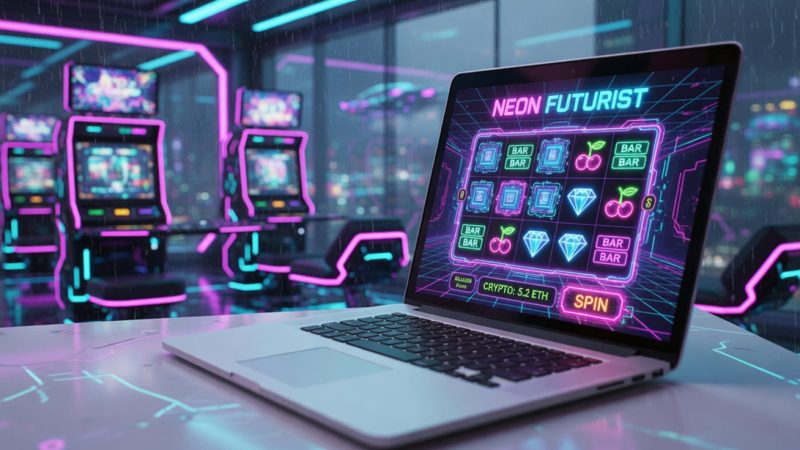
To understand why players are so fixated on AI prediction this year, we must look at the technology available to the average person. In 2026, many of our users are playing via spatial computing devices like the Apple Vision Pro 2, which has built-in eye-tracking and environmental sensors. Some believe that if an AI can analyze the “physics” of a live-dealer wheel through these sensors, it can calculate the landing zone. In my expert view, this is where the myth meets the reality of the house edge.
Even in 2026, our digital wheels are governed by “Quantum Random Number Generators” (QRNG). Unlike the pseudo-RNGs of the early 2020s, QRNG uses subatomic fluctuations to create a truly unpredictable seed for every single spin. An AI can analyze a billion past spins, but it is trying to find a pattern in a system that is designed by the laws of physics to be patternless. I often tell my clients that an AI trying to predict a QRNG is like a meteorologist trying to predict the exact shape of a cloud ten years from today, it is a pursuit of chaos, not logic.
The “Pattern Hunter” vs. The “Shield”
While AI cannot see into the future, it has become incredibly proficient at what I call “Micro-Bias Detection.” In our 2026 live-dealer studios, we use physical wheels that are masterpieces of engineering, but no physical object is 100% perfect. Professional players use “Pattern Hunter” AI to look for microscopic wear and tear or subtle dealer signatures that might favor one quadrant of the wheel over another.
As a casino representative, I can admit that this is a real threat. However, for every “Hunter” AI a player has, we have a “Shield” AI. Our 2026 security systems monitor the wheel’s performance in real-time, analyzing millions of data points to detect even the slightest deviation from true randomness. If our AI detects a 0.001% bias toward the “Tiers du Cylindre,” the wheel is automatically flagged for maintenance and replaced instantly. In 2026, the “Shield” is always one step ahead of the “Hunter,” creating a technological stalemate that preserves the integrity of the game.
AI as a Statistical Assistant, Not a Prophet
In my daily sessions with high-volume punters, I see a much more effective use of AI: the “Augmented Strategy.” These players aren’t trying to predict the next number; they are using AI to manage their “Dynamic Volatility.” The AI tracks their bankroll, the table’s recent history, and their emotional state (via biometric sensors) to suggest optimal bet sizing.
This is where AI actually provides value. It stops the player from making “Impulse Bets” or chasing losses. I have seen that players using “Augmented Strategy” AI stay in the game 30% longer and have a much higher “Sustainability Score.” It turns the experience from a gamble into a sophisticated exercise in risk management. The AI isn’t predicting the ball; it is predicting the player’s behavior and keeping them on the path of disciplined, mathematical play.
Comparative Capability: AI vs. Human vs. RNG 2026
To help you understand the limits of these technologies, I have prepared a comparison of how different entities “view” a game in the current year.
| Feature | Human Player | High-End AI (2026) | Quantum RNG (QRNG) |
| Logic Base | Intuition / Emotion | Historical Data Analysis | Subatomic Randomness |
| Pattern Detection | Subjective (Short-term) | Objective (Million-spin) | Non-existent (True Entropy) |
| Prediction Accuracy | 2.7% (Single Number) | 2.7% (Statistically) | N/A (Creates the Result) |
| Weakness | Tiling / Fatigue | Requires “Biased” Input | None (Current Physics) |
| Strength | Adaptability | Speed of Calculation | Absolute Fairness |
| Primary Tool | Spatial Headset | Neural Network | Blockchain Ledger |
The Myth of “Physics Engines” in Spatial Gaming
A unique 2026 trend is the use of AI “Physics Simulators.” Some high-tech players believe that by using the high-res cameras on their headsets, they can create a real-time digital twin of the live wheel and simulate the trajectory of the ball. I find this fascinating from a technical standpoint, but practically useless.
In our 2026 studios, we use “Variable Air Pressure” and “Motorized Rhythms” that subtly change the wheel’s speed and the ball’s friction in ways that are invisible to any camera. This is the “Electronic Counter-Measure” of the modern casino. Even if your AI could calculate the physics perfectly, our system introduces “Micro-Turbulence” that invalidates the calculation in the final milliseconds before the ball drops. We are essentially playing a game of electronic hide-and-seek where the house always has the last move.
Strategy: The “Augmented Player” Advantage
If you want to use AI effectively in 2026, stop looking for a “win-bot” and start looking for an “efficiency-bot.” The most successful players I represent use AI to calculate “Hedge-Bet Efficiency.” For example, if you are playing a complex combination of Inside and Outside bets, the AI can tell you the exact mathematical coverage of the table and how a “near-miss” affects your long-term EV (Expected Value).
This is “Professional-Grade Augmented Play.” It removes the mental fatigue of calculating odds on the fly, allowing you to focus on the social and immersive experience of the spatial casino. In 2026, the winning strategy is not about beating the wheel; it is about out-living the house edge through superior bankroll discipline and AI-enhanced data visualization. The math of the wheel is fixed, but the math of your bankroll is where the AI can truly shine.
Frequently Asked Questions
Can an AI bot be used on your platform?
In 2026, we allow “Assistant AI” for data visualization and bankroll management. However, we strictly prohibit “Automated Betting Bots” that take control of the player’s account. Our “Behavioral Biometrics” AI can detect the difference between a human hand gesture and a bot’s command in milliseconds, and such accounts are instantly locked to protect the community.
Does AI work better on digital or live-dealer wheels?
Statistically, it works on neither for “prediction.” However, on a live-dealer wheel, an AI might try to find a physical bias, whereas on a digital wheel, there is zero physical bias to find. In 2026, digital wheels are governed by QRNG, making them the most “AI-proof” games in the world.
What is the “God-Mode” algorithm I hear about on social media?
It is a scam. I have seen these “leaked” 2026 algorithms sold on the dark web for thousands of dollars. They are nothing more than “Martingale” simulators with a fancy 8K skin. No algorithm can predict a true QRNG or a professionally maintained 2026 physical wheel.
How does “Biometric Strategy” work?
Our 2026 interface can sync with your smartwatch to monitor your “Stress-Index.” If the AI sees you are getting “tilted” after a loss, it will suggest a 5-minute break or a lower bet size. This is the most effective way to use AI: as an emotional regulator for your gambling.
Can AI predict the “Dealer’s Signature”?
In the past, dealers had a “rhythm” that AI could track. In 2026, our dealers are trained with “Randomized Release” protocols, and their spin speeds are varied by an electronic prompter. This has effectively “scrambled” the signature that AI used to look for.
Is it legal to use AI for strategy?
In most jurisdictions in 2026, using AI as a “Reference Tool” (like a calculator) is legal. Using it as a “Predictive Tool” to attempt to gain an unfair advantage is often a violation of the terms of service and can lead to a permanent ban and forfeiture of funds.
What is “Quantum RNG” (QRNG)?
QRNG is a 2026 technology that uses the randomness of quantum particles to generate numbers. Unlike traditional computer code, which is “Pseudo-Random,” QRNG is “Truly Random” as defined by the laws of physics. It is the ultimate defense against predictive AI.
Can an AI “read” the wheel’s speed?
Yes, an AI can calculate the RPM (Revolutions Per Minute) of the wheel and the ball with high precision. But as I mentioned, our 2026 “Micro-Turbulence” systems change the friction coefficient in the final seconds, making the speed calculation irrelevant.
Why do some players claim they win with AI?
This is usually “Survivorship Bias.” If 1,000 people use an AI bot, by pure luck, a few will have a winning streak. They attribute the win to the AI, but it is just the natural variance of the game. In my ten years of data, I have never seen an AI-driven player consistently outperform the house edge over a 12-month period.
Will AI ever be able to beat the house edge?
Unless someone finds a way to break the laws of physics or hack into the QRNG server, no. The house edge is built into the payout (e.g., paying 35-1 on a 37-number wheel). AI can help you manage your money, but it cannot change the fact that the zero (or double zero) exists.
Conclusion
In the final analysis of 2026, the answer to whether AI can predict the outcomes of a spin is a definitive no, but the answer to whether it can improve your overall experience is a resounding yes. We have reached a point where the technological sophistication of the casino’s defenses-specifically Quantum RNG and micro-turbulence engineering-far outstrips the predictive capabilities of even the most advanced consumer-grade neural networks. The wheel remains a sanctuary of pure chance, a digital and physical environment where the laws of probability are protected with a level of intensity that would satisfy a central bank. As a representative of this industry, I find it vital that our players understand the distinction between “Prediction” and “Augmentation,” as the former is a myth that leads to ruin, while the latter is a tool for professional-grade enjoyment.
Ultimately, the true “AI Advantage” in 2026 lies in its ability to act as a shield for the player’s own psychology. By using algorithms to manage bankrolls, monitor stress, and visualize complex data, the modern punter can enjoy the thrill of the wheel without falling victim to the common emotional pitfalls of the past. The wheel will continue to spin, the ball will continue to find its pocket through a dance of pure entropy, and the house edge will remain a mathematical constant. But in this spectacular era of spatial and neural-linked play, being an “Augmented Player” is the most sophisticated way to enjoy the game. Respect the math, trust the QRNG, and use your AI to be the smartest, most disciplined version of yourself at the table. Welcome to the future of the spin.